Make Every Step Count: Indoor Signage That Works Like Magic
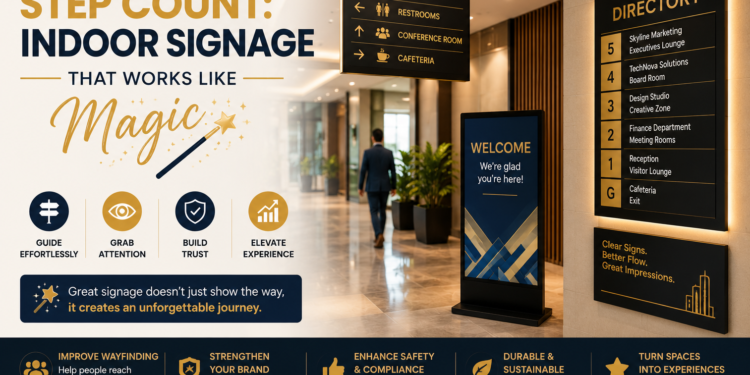
Have you ever walked into a store, office, or restaurant and instantly felt at home? Like you knew exactly where to go, what to do, and somehow trusted the brand before anyone even spoke to you?
That’s not an accident. That’s the magic of great indoor signage. Most people don’t notice good signage, and that’s exactly the point. When indoor signs for business are done right, they quietly guide you, reassure you, and sell to you without you even realizing it. But when they’re done wrong? You feel lost, confused, and you leave.
Let’s see how indoor signage for business truly works, and how you can use it to transform your space into a powerful, silent salesperson.
Why Indoor Signage Is More Powerful Than You Think
The reality is that almost all business owners spend thousands on websites, social media ads, and fancy logos. That is okay for online customers, but what about those who walk into your store and see bare walls? Or maybe you have only posted handwritten note for prices and discounts.
Well, if it is the case with you, you are missing out on a lot! Studies show that nearly 76% of consumers enter a store they’ve never visited before based solely on its signage. And once they’re inside? Your indoor signage keeps doing the heavy lifting.
Think of your indoor signs as your best employee, one who never calls in sick, never has a bad day, and is always saying exactly the right thing to every single customer, 24 hours a day. Sounds pretty magical, right?
The Different Types of Indoor Signs for Business (& What They Do)
Each sign is created differently. Let’s look at some of the main types of indoor signs for businesses and the purposes they serve.
Wayfinding Signs: These are the navigators of your space. Directional arrows, floor maps, department labels, they make sure your customers never feel lost. A confused customer is a lost customer. Wayfinding signs fix that instantly.
Informational Signs: Hours of operation, safety instructions, menu boards, pricing displays. These signs answer the questions your customers have before they even ask them. Less confusion, fewer interruptions to your staff, happier customers.
Promotional & Sales Signs: “Buy One Get One.” “Limited Time Offer.” “New Arrivals.” These indoor signage pieces are pure sales machines. Placed at the right spots, near entrances, checkout counters, or high-traffic aisles, they drive impulse purchases like nothing else.
Branding & Décor Signs: Your logo on the wall. Your brand colours in the hallway. An inspirational quote in the waiting area. These signs don’t scream “BUY NOW”, they whisper “trust us.” And trust, as we all know, is everything in business.
ADA & Compliance Signs: These aren’t optional; they’re legal requirements. Braille signs, accessible restroom markers, and emergency exit signs. Good indoor signage for business always includes compliance signs that protect both your customers and your business.
How to Place Indoor Signs So They Actually Work
Here’s a truth most sign companies won’t tell you: a beautiful sign in the wrong place is completely useless. Placement is everything.
- Eye level is buy level. Signs placed at average eye height (around 5 to 6 feet) get the most attention. Simple rule, massive impact.
- High-traffic zones are gold. Entrances, hallways, and near checkout, these are the spots where eyes naturally travel. Put your most important messages here.
- Don’t clutter. Too many signs = no signs. When everything is screaming for attention, nothing gets it. Keep it clean, clear, and focused.
- Use contrast. Dark text on light backgrounds. Light text on dark backgrounds. Make your signs readable from a distance without squinting.
- Lead the journey. Think about the path a customer takes from the front door to the checkout. Your indoor signs for business should guide that journey like breadcrumbs, one step at a time.
Design Tips That Make Indoor Signage Pop
You don’t need to be a graphic designer to create effective indoor signage. You just need to remember a few golden rules:
Keep it simple. If your sign needs a paragraph to explain itself, start over. The best signs communicate in 3 to 7 words.
Choose fonts wisely. Fancy, swirly fonts look beautiful in logos. They’re a nightmare with signage. Go bold, clean, and readable.
Colour psychology is real. Red creates urgency. Blue builds trust. Green signals health and calm. Yellow grabs attention. Choose colours that match the emotion you want your customer to feel.
Use high-quality materials. Cheap, faded, or peeling signs send one message to your customers: we don’t care. Invest in quality materials that reflect the quality of your business.
Real Businesses, Real Results
A small boutique in Chicago added branded wayfinding indoor signs for businesses throughout their store. Result? Average customer browsing time went up by 40%, and sales followed.
A dental clinic replaced its plain reception area with warm, reassuring indoor signage featuring calming colours and friendly messaging. Patient anxiety dropped noticeably, and online reviews started mentioning how “comfortable” the space felt.
A restaurant added bold indoor promotional signage near its bar area, highlighting seasonal cocktails. Those cocktails became their bestsellers within two weeks.
Magic? Not really. Strategy.
The Bottom Line
Every square foot of your business space is either working for you or wasting itself. Indoor signage for business turns empty walls, bare hallways, and forgotten corners into powerful touchpoints that guide, inform, and convert.
Your customers are already walking through your doors. The question is – do your signs make every single step count?
Whether you’re running a retail store, corporate office, clinic, or cafe, the right indoor signs for your business don’t just decorate your space. They define your brand, direct your customers, and drive your sales.
Frequently Asked Questions
What are the most important indoor signs every business should have?
Every business needs wayfinding, informational, promotional, and branding indoor signs for business. These four types together guide customers, build trust, and drive sales effectively.
How much does indoor signage for business typically cost?
The cost of indoor signage for businesses varies by size, material, and design. Basic signs are affordable, while premium custom indoor signs cost more but deliver long-term value.
How often should I update my indoor signs for business?
Review your indoor signage at least twice a year. Always update promotional signs seasonally and replace any faded, damaged, or outdated signs to maintain a professional appearance.