How a Thermoplastic Profile Supplier Supports Custom Extrusion Projects
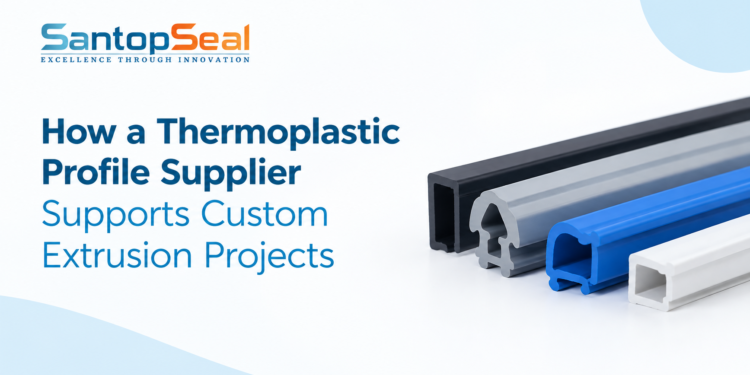
A successful custom extrusion project requires more than simply selecting a material and producing a profile. It involves careful planning, engineering, tooling, testing, quality control, and ongoing communication between the manufacturer and customer. This is where an experienced Thermoplastic Profile Supplier can play an important role. By supporting customers throughout the development process, a capable supplier can help transform a design concept into a consistent, application-ready thermoplastic profile.
Custom thermoplastic profiles are used across industries such as automotive, construction, electrical, HVAC, industrial equipment, furniture, and manufacturing. Since every application can have different dimensional, environmental, and performance requirements, having the right extrusion partner can make the development process more efficient and reliable.
What Is a Thermoplastic Profile?
A thermoplastic profile is a continuous component manufactured by extruding a thermoplastic material through a specially designed die. Unlike injection-moulded components, which are generally produced as individual parts, extrusion allows manufacturers to produce continuous lengths of a specific cross-sectional shape.
These profiles can be used for:
- Sealing
- Edge protection
- Insulation
- Cushioning
- Protection
- Mounting
- Decorative applications
- Structural support
Depending on the application, materials such as TPE, TPU, PVC, polyolefins, and other thermoplastics may be considered.
Understanding the Customer’s Application
One of the first responsibilities of a thermoplastic profile supplier is understanding exactly where and how the profile will be used.
Simply receiving a drawing may not always provide enough information. An experienced supplier may need to understand:
- Where the profile will be installed
- Required dimensions
- Operating temperature
- Chemical exposure
- UV and weather conditions
- Required flexibility or hardness
- Compression requirements
- Installation method
- Expected production volume
This application information helps the supplier determine whether the proposed profile design and material are suitable.
Material Selection Support
Choosing the right thermoplastic material is one of the most important parts of a custom extrusion project.
Different materials provide different characteristics. Some offer flexibility, while others provide greater stiffness, temperature resistance, chemical resistance, impact resistance, or weatherability.
A supplier can help evaluate material options based on the application’s requirements rather than selecting a material solely on availability or cost.
For example, an outdoor profile may need good weather and UV resistance, while an industrial profile may require resistance to oils or chemicals.
The correct material can have a significant impact on the final product’s service life.
Custom Profile and Design Development
A major advantage of working with an experienced extrusion supplier is technical support during profile development.
The supplier can review the proposed geometry and identify potential manufacturing challenges before tooling begins.
Important design considerations can include:
- Wall thickness
- Sharp corners
- Hollow sections
- Dimensional tolerances
- Material flow
- Cooling requirements
- Compression areas
- Installation features
A design that looks suitable on a computer screen may still be difficult to manufacture consistently. Early supplier involvement can help identify these issues and make the profile more extrusion-friendly.
Tooling Development
Custom extrusion projects generally require specially designed tooling.
The extrusion die determines the cross-sectional shape of the finished profile, making its design an important part of the development process.
A capable supplier can support:
- Profile design review
- Die design
- Tool manufacturing
- Initial extrusion trials
- Dimensional inspection
- Tool adjustments where necessary
- Final production approval
Proper tooling development can help improve dimensional consistency and reduce unnecessary production problems.
Prototyping and Sampling
Before moving into full-scale production, customers generally need to verify that the profile performs as expected.
Sampling allows manufacturers to inspect the actual extruded profile and compare it with the required specifications.
Depending on the project, samples may be evaluated for:
- Dimensions
- Hardness
- Surface appearance
- Flexibility
- Fit
- Compression
- Colour
- Functional performance
This stage provides an opportunity to identify issues before large production quantities are manufactured.
Dimensional Tolerance Control
Maintaining consistent dimensions is especially important for profiles used in precision applications.
A profile that is too large may be difficult to install, while a profile that is too small may not provide the required performance.
A thermoplastic profile supplier can establish appropriate dimensional controls based on the profile geometry, material, and application requirements.
The goal should not always be the tightest possible tolerance. Instead, tolerances should be realistic and based on the functional requirements of the product.
Production Consistency
Once the profile has been approved, maintaining consistency during ongoing production becomes essential.
An experienced supplier can control important extrusion parameters such as:
- Material feed
- Temperature
- Extrusion speed
- Pressure
- Cooling
- Line speed
Consistent process conditions help ensure that different production batches maintain the required profile characteristics.
This is particularly important for customers purchasing profiles repeatedly over an extended period.
Quality Inspection
Quality control is another important part of custom extrusion.
Depending on the application, inspections may include dimensional checks, visual inspection, material verification, hardness testing, and other relevant tests.
Quality procedures help identify deviations early and reduce the possibility of defective profiles reaching the customer’s assembly line.
For critical applications, documentation and traceability can also provide additional confidence in product consistency.
Supporting Production Scaling
A custom profile may initially be required for a small prototype project before moving into larger production quantities.
A good extrusion supplier should be able to support this transition while maintaining the agreed specifications.
Scaling production requires consideration of:
- Tooling capability
- Production capacity
- Material availability
- Quality controls
- Packaging
- Delivery schedules
This support can make the transition from prototype to commercial production smoother.
Packaging and Delivery
The profile is not complete when it leaves the extrusion line. Packaging and handling can also influence product quality.
Long flexible profiles can be damaged, deformed, or contaminated if they are not packaged appropriately.
Depending on the profile, suppliers may provide suitable packaging methods such as coils, rolls, bundles, or straight lengths.
Proper packaging helps protect the profile during storage, transportation, and handling.
Long-Term Technical Support
Custom extrusion projects often continue beyond the initial product launch.
Changes in application requirements, material availability, production volumes, or design specifications may require further technical support.
A reliable supplier can help customers evaluate modifications and maintain consistency throughout the product’s lifecycle.
This long-term relationship can be especially valuable for manufacturers who depend on consistent profiles for ongoing production.
Why Choosing the Right Supplier Matters
Not every extrusion supplier offers the same level of technical support. When selecting a partner, manufacturers should consider factors such as:
- Custom extrusion experience
- Material knowledge
- Tooling capabilities
- Quality control systems
- Production capacity
- Ability to meet dimensional requirements
- Sampling and testing capabilities
- Communication and technical support
A supplier that understands both extrusion manufacturing and the customer’s application can contribute significantly to project success.
Conclusion
A Thermoplastic Profile Supplier can contribute to much more than the production of an extruded component. From material selection and profile design to tooling, prototyping, quality control, production scaling, and delivery, the right supplier can support every stage of a custom extrusion project.
For manufacturers, choosing an experienced extrusion partner can help reduce development challenges, improve product consistency, and create profiles that meet specific application requirements. SantopSeal supports custom thermoplastic extrusion projects by focusing on application requirements, profile design, material selection, manufacturing consistency, and quality. With the right technical partnership, manufacturers can develop thermoplastic profiles that deliver reliable performance and long-term value.