Sacred rituals, divine blessings, and family devotion — preserve the spiritual heart of your Grahshanti ceremony forever.
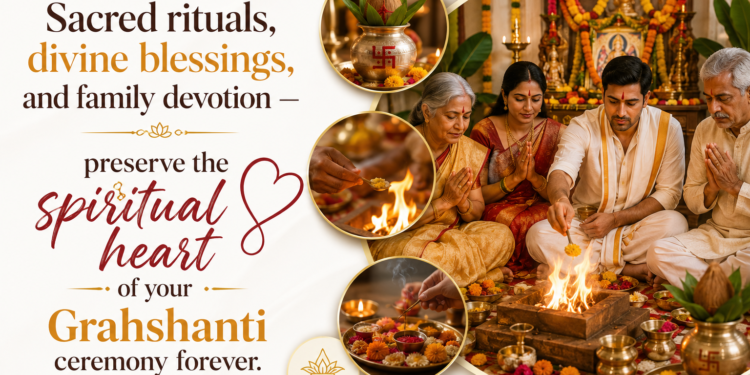
Among all the pre-wedding ceremonies in a Gujarati wedding, the Grahshanti holds a place of deep spiritual significance. It is a sacred Vedic ritual performed to seek the blessings of the nine planets (Navagrahas) and to ensure that the wedding day unfolds under auspicious cosmic conditions. Priests chant mantras, yagnas are performed, and the family gathers in reverence and devotion. It is a quiet, profound ceremony that sits in gentle contrast to the colour and noise of events like Sangeet and Haldi.
Photographing the Grahshanti ceremony requires a particular kind of sensitivity — the ability to be present without being intrusive, to capture the sacred without disturbing it, and to document the divine with an aesthetic that honours the ceremony’s spiritual nature. If you are looking for the best Grahshanti photographers in Ahmedabad, KliqShot brings you experienced professionals who understand and deeply respect this sacred ceremony.
What is the Grahshanti Ceremony?
The Grahshanti puja is performed before the main wedding ceremony, typically at the bride’s or groom’s home. A learned priest conducts the rituals, which involve the recitation of Sanskrit shlokas, the preparation of a sacred fire (havan), the offering of various materials to the fire, and prayers directed at each of the nine celestial bodies — the Sun, Moon, Mars, Mercury, Jupiter, Venus, Saturn, Rahu, and Ketu.
The ceremony is attended by close family members who participate in the prayers and rituals. The atmosphere is one of quiet devotion, punctuated by the rhythmic chanting of mantras and the gentle crackling of the sacred fire. This creates a profoundly beautiful visual and emotional environment for photography.
KliqShot connects you with Grahshanti photographers in Ahmedabad who have experience photographing religious ceremonies with the respect, care, and artistry they deserve — capturing sacred moments without disrupting the sanctity of the ritual.
The Unique Challenges of Grahshanti Photography
Low and Warm Lighting
Grahshanti ceremonies are often performed indoors in a home setting where lighting may be low or warm-toned. The sacred fire provides a beautiful natural light source but is unpredictable and localised. A skilled Grahshanti photographer knows how to work with these conditions — using high ISO settings, wide aperture lenses, and minimal flash to preserve the authentic, warm atmosphere of the ceremony.
Respectful and Unobtrusive Presence
Unlike a Sangeet or Haldi ceremony, the Grahshanti requires the photographer to be especially mindful of their presence. Moving around during mantras, using loud camera sounds, or interrupting the flow of the ritual is not appropriate. Experienced Grahshanti photographers on KliqShot understand this instinctively and operate with a level of discretion and respect that puts families at ease.
Capturing the Invisible — Emotion and Devotion
What makes Grahshanti photography so meaningful is that the most important things happening are invisible — the prayers, the intentions, the blessings. A skilled photographer captures the visible signs of these invisible realities: folded hands, closed eyes, the glow of the fire on a grandmother’s face, the reverent expression of a father performing puja for his child’s future happiness. These are the photographs that carry the deepest meaning.
Ritual Detail Photography
The Grahshanti ceremony involves many beautiful ritual elements — the decorated puja thali, the sacred kalash, the colourful rangoli, the offerings of flowers, fruits, and grains. A thoughtful photographer documents these details with care, creating a visual record of the sacred preparations that add richness and context to the complete ceremonial story.
What Great Grahshanti Photography Looks Like
The best Grahshanti photographs share several qualities. They are honest — they capture real moments of devotion rather than staged poses. They are atmospheric — the warm glow of the fire, the wisps of smoke from the havan, the dappled light through the puja space all contribute to an image that feels genuinely sacred. And they are emotionally resonant — they make you feel the weight of the occasion and the love embedded in every ritual act.
When you look through a well-photographed Grahshanti album, you should feel transported back to that morning — the smell of incense, the sound of mantras, the warmth of family gathered in prayer. That is the power of great Grahshanti photography, and it is what the photographers on KliqShot strive to deliver.
Why Documenting the Grahshanti Matters
Preserving Spiritual Heritage
The Grahshanti puja is a ritual that has been performed for generations in Gujarati families. Photographing it is a way of preserving not just your personal memories but also a piece of your family’s spiritual heritage. These photographs become part of your family’s history — visual proof of the traditions that have been honoured across generations.
Honoring the Elders
The Grahshanti is often led by the oldest and most respected members of the family. Photographs of grandparents in prayer, parents performing rituals, and family gathered in devotion are among the most precious images that emerge from a wedding. They are the photographs that future generations will treasure most deeply.
The Complete Wedding Story
A comprehensive wedding album tells the complete story of the union — not just the glamour of the wedding day but also the sacred foundation laid in ceremonies like the Grahshanti. Including this ceremony in your photography ensures that your wedding story is complete, contextual, and deeply meaningful.
Finding Grahshanti Photographers in Ahmedabad on KliqShot
KliqShot makes it easy to find the right photographer for your Grahshanti ceremony. When you browse Grahshanti photographers in Ahmedabad on KliqShot, you can:
- View portfolios specifically showcasing religious and ritual ceremony photography
- Read reviews from families who have used the photographer for similar ceremonies
- Compare packages for standalone Grahshanti coverage or as part of a complete wedding bundle
- Contact photographers directly to discuss specific requirements, timings, and expectations
- Book with confidence through a transparent, verified platform
Grahshanti Photography Packages Available on KliqShot
- Standalone Grahshanti shoot — 2-3 hours of dedicated ceremony documentation
- Grahshanti + Mehndi combo — two pre-wedding rituals covered together
- Full pre-wedding bundle — Grahshanti, Mehndi, Haldi, and Sangeet
- Complete wedding week package — all events from Grahshanti to Vidaai covered
Tips for a Well-Photographed Grahshanti Ceremony
- Inform the photographer about the ceremony’s timing, location, and sequence in advance
- Ensure the puja space is well-lit — add additional warm-toned lamps or diyas if the natural or ambient light is insufficient
- Brief family members that the photographer will be present and that normal, genuine participation in the ritual is the goal — not posing
- Allow the priest to know a photographer will be present so they can accommodate a discreet presence without disruption
- Create a small designated area for ritual detail shots — the decorated thali, kalash, and flowers arranged beautifully
Conclusion: Honour the Sacred, Preserve the Memory
The Grahshanti ceremony is the spiritual foundation of your wedding. It is where your family’s love and prayers are offered to the universe on your behalf. That deserves to be documented with the same care and reverence with which the ceremony itself is conducted. A skilled Grahshanti photographer is not just a technician — they are a witness to something sacred, and they carry that responsibility with honour.
KliqShot is proud to connect Ahmedabad families with photographers who truly understand this. Book your Grahshanti photographer in Ahmedabad through KliqShot today and ensure that the most sacred moments of your wedding journey are preserved in photographs worthy of their meaning.